





In February, Mexican special forces carried out an operation against the Jalisco New Generation Cartel (CJNG), killing its cofounder and leader Nemesio Oseguera Cervantes, known as “El Mencho.” The operation comes after months of pressure from the Trump administration, which accused Mexican President Claudia Sheinbaum of weakness in the face of organized crime and threatened to send in the U.S. military.
Will Sheinbaum’s administration gain some breathing room from Trump’s demands to stamp out the cartels? It’s possible – and Mexico might also stake a better position in the negotiations to reapprove the United States-Mexico-Canada Agreement (USMCA). However, new analysis from Insight Crime, a think tank focused on organized crime in the Americas, suggests that CJNG’s operations are continuing, and that the group remains poised to continue expanding.
That’s no anomaly, according to political science scholarship on the effects of drug war strategies. Militarized strategies in general, and the “kingpin strategy” in particular, are not linked to reduced drug flows. And, in many cases, these strategies appear linked to increased violence.
Why militarized drug war strategies can backfire
Political scientist Gustavo Flores-Macías examined the effects of Mexico’s militarized anti-drug strategy in 2006. His focus was when the armed forces took on a prominent and sustained role in the war on drug trafficking organizations (DTOs). He notes that prior to the use of Mexico’s armed forces, DTOs preferred to avoid violence when possible in order to avoid unwanted attention from the government. But when targeted directly by the armed forces, DTOs scaled up their technological capacity by acquiring armored vehicles and military-grade weapons, and created specialized private armies to defend themselves and fight back.
The history of the CJNG reflects this pattern. This drug trafficking cartel formed in 2010, after Mexican security forces killed a leader of the Sinaloa cartel. Once the CJNG consolidated, the group quickly created a specialized armed unit and acquired rocket-propelled grenade launchers and other military-grade weapons. The CJNG targeted rival DTOs, but also confronted the Mexican government directly. For example, in 2015, CJNG forces shot down a military helicopter. And this cartel was allegedly responsible for the assassination of a former governor in 2020.
It seems farfetched to expect a different outcome from the most recent operation that killed El Mencho. U.S. and Mexican authorities alike acknowledge that the CJNG is highly capable of sourcing military-grade weapons from U.S. gun shops. In fact, the vast majority of weapons seized thus far during Sheinbaum’s administration came from the United States. Mexican officials have noted the importance of addressing arms trafficking as part of the war on drugs. One Mexican congressman declared, “We can’t stop drug traffickers if the United States continues allowing them to strengthen their military capabilities.”
The kingpin strategy can exacerbate violence
Taking out top leaders of DTOs, like El Mencho,is often referred to as the kingpin strategy. Here’s the logic, as director of the Conflict Dynamics and Peace Negotiations Area at Ideas for Peace Foundation Juan Carlos Garzón Vergara explains: Removing the leader will damage the organization and impede the DTO’s ability to traffic drugs. However, in practice, the end results are much less straightforward.
In some places, large DTOs have indeed broken apart after the leader was taken out. For example, political scientist Charles Brockett notes that in Colombia, Mexico, and Guatemala, removing drug kingpins has caused large DTOs to fragment. However, even when groups fragmented, levels of drug trafficking remained stable or dipped, then rebounded. Indeed, early analysis suggests that El Mencho’s killing is unlikely to disrupt cocaine flows.
And there’s a bigger risk that following this strategy and knocking out the kingpin actually results in increased violence. Because the drug market is so lucrative, taking out a kingpin creates opportunities for people within and outside the targeted DTO. Social scientists Gabriela Calderón, Gustavo Robles, Alberto Díaz-Cayeros, and Beatriz Magaloni outline four mechanisms that link the kingpin strategy to increased violence. First, leadership succession struggles may lead to intra-cartel violence. Second, other DTOs may seize the opportunity to attack a temporarily weakened rival, creating inter-cartel violence. Third, as organizations are disrupted, lower-level members may engage in more localized predatory behavior. And fourth, DTOs may respond by attacking the government that initiated the crackdown. Calderón and her colleagues found that in Mexico between 2006 and 2012, the Mexican government successfully eliminated many drug cartel leaders, but these reported successes in the war against drugs were also associated with a major uptick in cartel violence.
What should we expect with El Mencho gone?
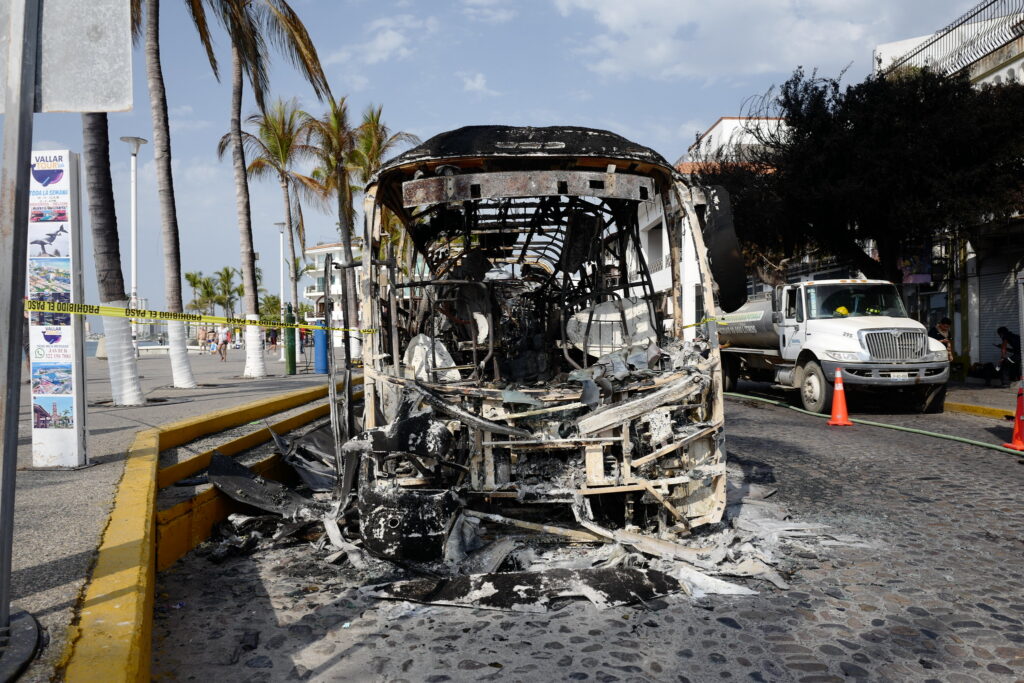
After the killing of El Mencho, media outlets reported a brief wave of retaliatory violence across Mexico. CJNG amplified its retaliation with a misinformation campaign designed to make it seem that the cartel had its tentacles everywhere. But within days, things had returned to normal, even in CJNG’s home state of Jalisco.
Insight Crime notes that the size and reach of the CJNG makes it likely that at least some of the dynamics outlined by Calderón and her colleagues could come to pass. CJNG has a franchise-style structure, so in the wake of El Mencho’s death, numerous regional leaders could make a play for the top leadership. And the criminals that make up the lower levels of CJNG’s dispersed structure may see an opportunity to act more independently in their local areas. At the same time, rivals like the Sinaloa cartel may gamble that El Mencho’s death opened cracks in the organization, and attempt to take over CJNG territory. All this increases the risk of violence. On a final note, the disruption to criminal organizations could extend beyond Mexico. Colombia and Ecuador were central to CJNG’s transnational operations, so disruptions in those networks could spill over into violence in those countries as well.
After the Trump administration’s recent military attacks on Venezuela and Iran, Mexico’s president may have bought herself some time out of Trump’s crosshairs. But it is unlikely that Sheinbaum has improved the security situation at home. In time, we may find the Mexican government’s crackdown on CJNG activities may well have exacerbated the security risks.
Stay up to date on all things politics and political science. Bookmark our landing page and sign up for Good Authority’s weekly newsletter by entering your email address in the box below.