






A recent New York Times investigation offers a glimpse into the life of former Syrian dictator Bashar al-Assad. After losing power and fleeing to Moscow, Assad is reportedly enjoying fine dining, luxury shopping, and nights at hookah bars. Assad seems to be lying low, playing video games rather than plotting his return to power. His story seems in line with theories of exile providing a “golden parachute” to problematic rulers.
He’s not the only ousted autocrat to seek exile in Russia, in fact. Former Ukrainian president Viktor Yanukovych, who was unseated in the 2013-2014 Euromaidan revolution, remains in Russia. And Kyrgyzstan’s former president Askar Akayev lived in Russia for 16 years after being overthrown in the 2005 Tulip revolution.
However, most political exiles are not former dictators but rather their opposition. For example, thousands of Venezuelan opposition members went into exile under the Maduro regime, actively mobilizing against the regime from abroad. Reza Pahlavi, the son of Iran’s last shah, has reportedly become a rallying force for recent anti-government protests – although he has faced criticism from other groups within the Iranian opposition.
Does exile neutralize forces opposing an incumbent regime – or does it create a sanctuary that enables challengers to sustain opposition? Assad’s experience in Moscow thus far seems to support the former possibility. In contrast, the Venezuelan opposition in exile continued to challenge the Maduro regime. We decided to test this question empirically by building and analyzing a new dataset of exile involvement in revolutions. Our results show that revolutions tend to be more violent and last longer when exiled challengers get involved, compared with revolutions led only by domestic opposition. This finding suggests that an exiled opposition can still destabilize incumbent regimes, even from abroad.
What is exile, and how does it differ from other concepts?
We define exile as a form of forced emigration, which the incumbent regime uses to punish an individual for their past or anticipated political behavior. It is part of an authoritarian regime’s broader repressive toolkit, similar in many ways to other types of regime-sponsored repression.
In this case, exile is a way to demobilize challengers and any threatening behavior by removing them from national territory. A repressive regime might target a range of people, from former leaders, to members of formal opposition parties, to heads of civil society groups and individual activists. Often the targets are those willing to ignore personal risks to take a stand against the regime.
Exile is a double-edged sword for political activists
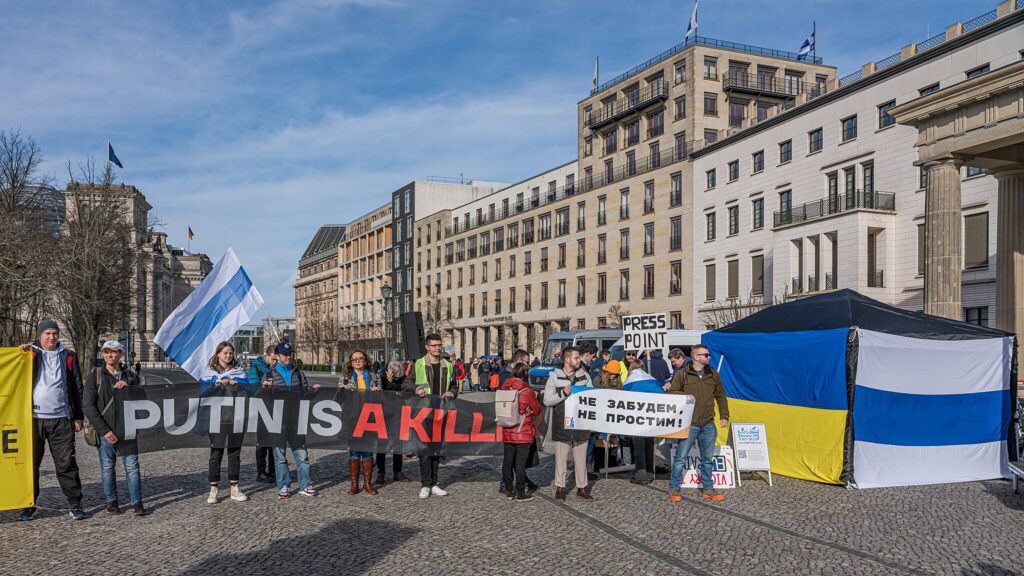
Regimes intend for exile to demobilize the opposition, and it sometimes succeeds. Being forced to leave one’s home country deprives exiles – both former leaders and other politically active individuals – of material resources, but can also damage their legitimacy in the eyes of ordinary citizens. Returning to Russia, for instance, helped Alexei Navalny cement his credibility as a domestic opposition leader. After Navalny’s death, however, the fractured Russian opposition abroad has struggled to stay relevant.
But exile also presents advantages for those within the political opposition. It provides relative shelter from the repressive reach of the government – though perhaps that is changing in an age of transnational repression, when regimes target political opponents beyond their borders. From the relative safety of exile, opposition leaders can gather resources and recruit allies to help in their struggle. Indeed, many ousted leaders and exiled political activists continue to participate in politics while abroad. They demonstrate in solidarity with protesters at home, send money to domestic activists, and lobby host governments to intervene in their home countries. On Feb. 14, for example, Pahlavi gave a speech at a large demonstration in Munich to show solidarity with the protesters in Iran.
A growing body of political science research shows the various ways in which exiles influence politics in their home countries. One study finds that the presence of an exiled former leader heightens political instability at home, increasing the likelihood of civil conflict, coups, and mass protest. Research on Venezuela indicates that activists tend to call for foreign intervention more often after going into exile. Evidence from Egypt illustrates how exiles use social media to spread anti-regime criticism.
Our research shows that exile escalates revolutions
In a new working paper, we analyze the role that exiles play in a specific but highly consequential form of political contention: revolutions. Exiles are front and center in many of the notable revolutions of the twentieth century, including Vladimir Lenin in Russia and Fidel Castro in Cuba. But our study is – to our knowledge – the first to systematically analyze how exiles influence revolutionary dynamics at a global scale.
Building on Mark Beissinger’s dataset covering all revolutionary episodes from 1900 to 2014, we identify whether challengers were based in exile within a one-year window prior to the start of each revolution, where they were located, and which political activities they pursued while abroad. We find that exile is common in revolutionary episodes: Nearly one-third (31%) of revolutionary situations during the study period involved at least one challenger who had previously been in exile. Figure 1 plots the number of revolutionary episodes by decade, showing the share of these episodes that involved an exiled challenger versus those in which all challengers were based in-country. Exile participation in revolutions seems to increase somewhat over time, especially from the interwar period through the 1980s.

We also find that revolutions with exiled challengers tend to involve more violence and last longer than those with domestically based challengers. The left panel of Figure 2 shows the average number of deaths in revolutions with and without an exiled challenger; the right panel shows the average number of days that each type of revolution lasts. The positive relationships between exile and both violence and duration hold even after controlling for a number of other potential confounders – or, factors that might explain both the incidence of exile and how long or violent a revolution becomes – like location (urban versus rural) and aims of the revolution.

In the paper’s appendix, we explore other country characteristics associated with exile, like region and regime type. Exiled challengers are especially prevalent in the Middle East/ North African and sub-Saharan African regions. Additionally, we find that military dictatorships are more likely to face exiled challengers than other types of regimes.
Exploring the mechanisms underlying these relationships, we find that those in exile close to home – in an adjacent country or within the same world region – are more likely to have an escalatory effect, vs. those who settle far away. This makes intuitive sense: Some revolutions involve an exiled challenger invading their home country from a neighboring country to reclaim power. A classic example is the 1978-1979 Nicaraguan Revolution, when Sandinista forces, some operating from exile in neighboring Costa Rica, launched cross-border incursions that helped topple Anastasio Somoza.
Beyond the physical location of exiles, we analyze what kinds of activities they were engaged in. We find that, holding other factors constant, revolutions were longer and more violent when exiles provided direct leadership of the revolutionary movement and when they mobilized support from foreign governments – i.e., this support was not just from diaspora communities. For example, in the First Chadian Civil War (1965 to 1979), the Kingdom of Libya provided rebels with supplies and allowed them to establish bases in Libya.
What can we learn from this research?
Revolution remains an exceedingly rare event, and – as we show in our paper – the existence of an exiled challenger does not necessarily make revolutions more likely to succeed. However, our research and others show that exiles can intensify domestic contention, especially when exiles are based not far from home and when they mobilize international support. Returning to contemporary cases, our work suggests that the relative proximity of many Russian exiles to their home country may be an advantage for the Russian opposition. Exiles living much farther away face practical constraints. Even in the social media era, distance still limits the ability of those in exile to rally opposition to the regime in power.
The broader point we want to stress is that even though exile is intended to demobilize activists who challenge autocratic regimes, it often fails to do so in practice. Instead, exile presents opposition movements with new challenges. Yet, if they manage to overcome these challenges, they may find new opportunities to force political change in their home countries.
Isabelle DeSisto is a PhD candidate in politics at Princeton University, and a 2025-2026 Good Authority fellow.
Elizabeth R. Nugent is an assistant professor of politics at Princeton University.
Stay up to date on all things politics and political science. Bookmark our landing page and sign up for Good Authority’s weekly newsletter by entering your email address in the box below.