






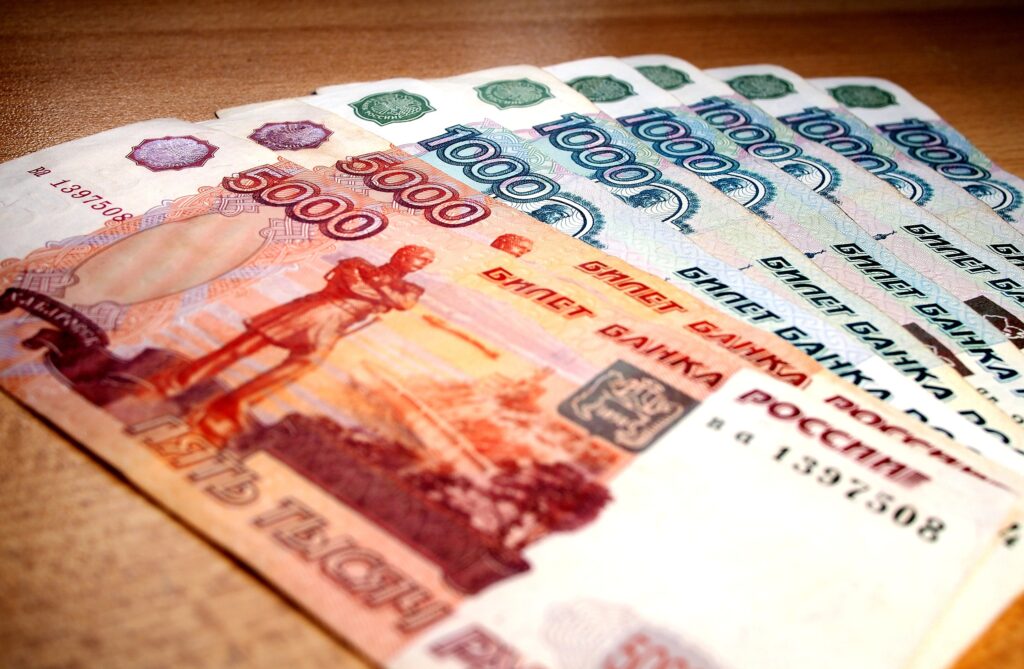
Since Russia’s full-scale invasion of Ukraine in 2022, Western countries have frozen roughly €200 billion – about $234 billion – in Russian assets. This action aligns with customary international law. Scholars argue that one key goal is to leverage these assets to pressure Russia toward a satisfactory end to the war. Yet European policymakers face legal, economic, and political challenges in actually using the frozen funds to help Ukraine.
Policymakers in the E.U. – and also in the United States – have debated whether to formally seize the frozen assets. Doing so would let European governments help strengthen Ukraine’s defenses significantly. This would also spare policymakers from requesting additional funds from voters or financial markets. However, a number of legal and economic hurdles have dampened their enthusiasm.
What makes this issue so complicated?
Analysts argue that confiscating Russian assets would be morally justifiable. Legal scholars, however, highlight complex issues surrounding government immunity and property rights. Under customary international law, frozen assets must remain temporary and reversible. Sanctions (formally called countermeasures) are not meant as permanent punishment. Their purpose is to pressure a government to stop violating the law and return to compliance. International law treats these measures as “a time-out” aimed at preventing irreversible harm to global relations. Given this intention and design, European governments have little legal room to maneuver. So far, any attempt in this direction has prompted Russian threats of retaliation if Europe seizes its assets.
European authorities also face broader economic and financial concerns. For example, the European Central Bank (ECB) worries that expropriation could discourage foreign countries from holding euros in their reserves. This would weaken demand for the euro, and jeopardize the E.U.’s long-term goal of establishing the euro as a global reserve currency.
The potential repercussions of a full seizure of Russian assets could reach far beyond Europe – and erode the trust that underpins global capital flows. To be sure, a complete halt in capital flows is unlikely. But a shift in global reserve holdings is possible, and would diminish Europe’s global economic influence. Non-Western countries might begin to move away from G7 currencies, which they currently regard as safe reserve assets. Instead, they could turn to alternatives like gold or even the renminbi. The uncertainty about the scale of a potential pushback is one central reason for Europe’s caution in deciding what to do with the frozen Russian assets.
Europe is sitting on these assets
Given these considerations, European countries have not directly transferred any frozen Russian assets to Ukraine. They have also not used the “interest” generated by these holdings, contrary to some media reports. Such earnings legally belong to Russia, and seizing them would pose similar challenges. Instead, the European Commission and the Council of the E.U. have relied on what they call “windfall profits.” These refer to extraordinary gains made by certain European financial institutions that were holding the frozen assets when sanctions took effect.
Euroclear, a Brussels-based financial clearinghouse, holds approximately €185 billion – $216 billion – in Russian assets. The cash is invested in Western government bonds. As legal expert Anton Moiseienko explains, Euroclear has collected “extraordinary” profits on these holdings since the freeze on Russian assets in February 2022. In 2024, the E.U. introduced a new ruling requiring Euroclear to segregate these profits in its financial reporting and refrain from distributing them to shareholders. Some of the windfall profits have since been transferred to Ukraine in tranches. Some experts believe this approach is “legally sound.”
Meanwhile, Ukraine’s financial needs remain acute. The International Monetary Fund estimates that Kyiv will require $65 billion through 2027. Similarly, Ukrainian authorities project external funding needs of $150 billion to $170 billion through 2029. Given the increasing financial toll of the war, experts have begun exploring solutions that would maximize the frozen Russian assets’ utility without technically expropriating them.
Using Russian assets for a “reparations loan”
In her 2025 State of the Union address, European Commission President Ursula von der Leyen proposed using Russian cash deposits at the ECB to fund a “reparations loan.” The loan, she explained, would support Ukraine’s “war effort and reconstruction.” Under this plan, the E.U. would trade roughly €140 billion – $164 billion – in frozen assets with zero-coupon bonds, jointly guaranteed by all member states. Recent reports indicate that the Commission may also draw on an additional €25 billion – $29 billion – from private Russian accounts in several E.U. countries. The E.U. would then lend the cash to Ukraine in tranches. Repayment would be required only if Russia fulfills its war reparations obligations. Should Russia refuse, the frozen assets would remain immobilized, effectively covering the loan.
The proposal offers multiple advantages. It would provide Ukraine with a reliable funding stream while avoiding the legal complications of outright confiscation. Von der Leyen also noted that Ukraine would use the loan to buy European weapons. This would support European defense industries.
Who’s on board?
The plan has garnered support from individual ECB policymakers, members of the European Parliament. Several E.U. leaders, including the German chancellor and the Finnish and Swedish prime ministers, are also on board. In September, the United Kingdom announced a similar plan to provide Ukraine with a reparations loan using frozen Russian assets held in London.
Despite increasing support for the European Commission’s proposal, some E.U. member states, including Belgium and France, remain hesitant. The biggest risk is that a single member could veto the renewal of sanctions on Russia, which requires unanimous approval every six months. This creates a political risk: These sanctions could unexpectedly be lifted as early as February 1, 2026. Possible vetoes could come from Hungary, Slovakia, or even the Czech Republic.
Some scholars suggest revamping sanctions approval rules from unanimity to a qualified majority. Such a change would require difficult negotiations. Nonetheless, the European Commission has recently signaled openness to this approach.
Navigating a complex path
Russia’s frozen assets present both an opportunity and a challenge for the European Union. The moral and strategic case for using these funds to support Ukraine is compelling. But legal, economic, and political constraints have prevented direct action. Amid these constraints, the European Commission’s “reparations loan” plan may be an innovative solution. However, the big political hurdle is that any single E.U. member state could block meaningful action.
The E.U. faces a delicate balancing act. It must support Ukraine without breaking international law or upsetting European voters. And the E.U. must also keep financial markets stable and protect the euro’s credibility. At the same time, managing the differing interests of all 27 member states is never an easy task. Handling Russia’s frozen assets adds to the already long list of challenges the E.U. must navigate.
Mert Kartal is a 2025-2026 Good Authority fellow.