






In 1933 President Franklin Delano Roosevelt, a Democrat, decided to fire William Humphrey, a Republican commissioner on the Federal Trade Commission (FTC).
The problem for FDR was that the 1914 law that created the FTC provided commissioners with a seven-year term, during which they could only be removed for “inefficiency, neglect of duty, or malfeasance in office.” FDR’s issues with Humphrey were instead centered on FTC policy: As FDR told Humphrey, “I do not feel that your mind and my mind go along together.”
Trump tried the same maneuver
In 2025, Republican President Donald Trump decided to fire two Democratic appointees to the FTC, telling them – like FDR – that their “continued service… is inconsistent with my Administration’s priorities.”
The problem for Trump was that 90 years earlier, Humphrey had sued over his removal from office. And, posthumously (thus the case name is Humphrey’s Executor), he won. Indeed, the Supreme Court ruled unanimously in 1935 that “we think it plain that illimitable power of removal is not possessed by the President in respect of officers of the character of those just names” – specifically, regulatory commissions distinct from the “purely executive” officials in agencies reporting directly to the White House.
With that in mind, Rebecca Slaughter, one of the commissioners Trump fired, sued to prevent her removal. Given the text of the law and the clear precedent of Humphrey’s Executor – the same presidential rationale, even the same agency – Slaughter won her case in the lower courts.
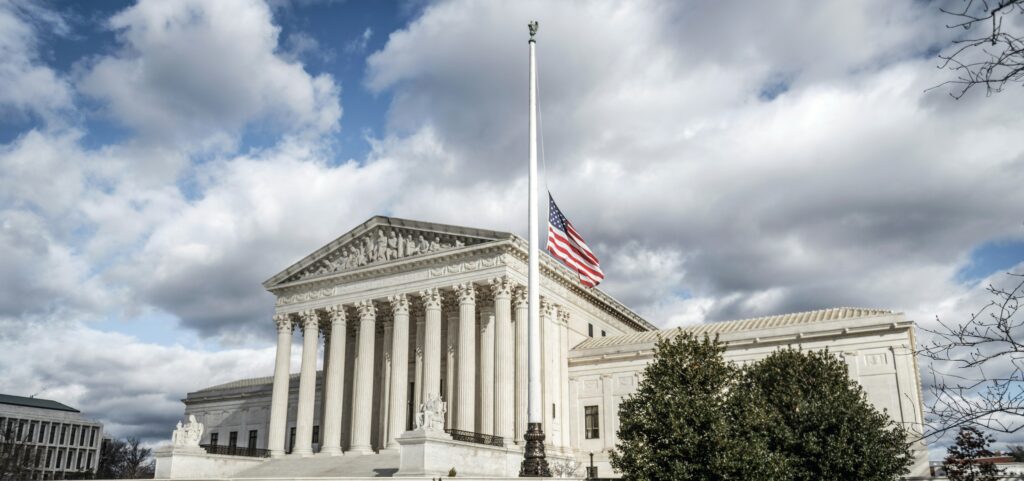
But on June 29, 2026, the Supreme Court changed its mind. The Humphrey’s Executor ruling, Chief Justice John Roberts wrote, “has not withstood the test of time.” Or at least, critics were quick to suggest, the test of a six-member majority determined to impose its own version of the separation of powers on the Constitution and on history (see also: Trump v. United States). As President Trump soon boasted, “90 years of precedent has been COMPLETELY AND UNEQUIVOCALLY OVERRULED,” causing “the Greatest Increase in Presidential Power in the last 100 years.”
What does the Constitution say about presidential power?
For an extended discussion of the cases that led to this point, see here and here. But all of this discussion, as usual, starts with the U.S. Constitution – and its provision that “the executive power shall be vested in a president.” That executive power is undefined, but most agree it must include some kind of HR function. “Inferior” officers’ appointments can be made by the president, department heads, even the courts, depending on how Congress writes the law. But high-ranking, principal officers are nominated by the president, and confirmed by the Senate. Interestingly, Alexander Hamilton argued that Senate permission would be needed to fire those officials as well as to hire them. But after much debate the first Congress gave the president sole control over removing the first department heads. The Slaughter decision more than two centuries later relies heavily on what the justices in the majority reverently term that “Decision of 1789” – returning to the reasoning of a 1926 case Humphrey greatly constrained, Myers v. U.S.
In Myers, Chief Justice William Howard Taft, a former president himself, wrote a sweeping opinion for a sharply divided court. Taft argued that a law limiting the president’s ability to fire a postmaster was “quite out of keeping with the plan of government devised by the framers of the Constitution.” He reasoned that since the president’s “selection of administrative officers is essential to the execution of the laws by him, so must be his power of removing those for whom he cannot continue to be responsible.” This is the heart of more recent notions of a “unitary executive.”
The big question, then, is how far that presidential power extends. Or, put another way, what power does Congress – which creates (and funds) every part of the executive branch – have to buffer its agencies or officials from direct political control? And if the answer is “basically none,” why doesn’t the Constitution say so? As dissenters to Myers pointed out, far weaker grants of executive managerial authority were spelled out: It was hard “to picture forty or fifty capable men… discussing, in the heat of a Philadelphia summer,” Justice James McReynolds wrote, “whether express authority to require opinions in writing should be delegated to a President in whom they had already vested the illimitable executive power here claimed.”
Interestingly, as constitutional law scholar Andrea Scoseria Katz recently wrote, Taft himself said after leaving the White House that it was impossible – and also counterproductive – for a president to “impose his personality minutely” on the government’s “permanent structure.” And again, as the era’s preeminent scholar of the presidency, Edward Corwin, wrote shortly thereafter, Humphrey’s went “a long way towards scrapping the Myers decision,” limiting its applicability to line officials who were (as the decision put it) “responsible to the President and to him alone, in a very definite sense.”
But, as Katz aptly puts it, “like the loaded gun at the start of a Chekhov play, Myers survived, ready to be picked up and fired when the moment was right. That moment has arrived.”
Here are some key wayposts to that moment
Back in 1988, Justice Antonin Scalia was the only dissenter to a decision written by Chief Justice William Rehnquist solidly upholding the odd institutional structure of the Independent Counsel Act. Scalia famously objected that Article II’s vesting clause “does not mean some of the executive power, but all of the executive power.” A 2016 decision about the Consumer Financial Protection Bureau (CFPB) by then-Circuit Court Judge Brett Kavanaugh quoted Scalia’s dissent seven times, claiming there is “nearly universal consensus” that it was correct all along.
This turns out to be true if the universe being surveyed is made up of current Republican appointees to the Supreme Court and their law clerks. As that census grew, by 2020 the Court had decided that there were two choices for executive agency leadership, either empowering (a) a single director serving at the pleasure of the president, à la Myers, or (b) a multi-member board of commissioners who could be protected from at-will removals. This invalidated the CPFB’s model – a single director with a fixed term removable only for cause. As one of four dissenters, Justice Elena Kagan objected that it was up to Congress to decide when agencies needed political insulation in order to make nonpartisan decisions grounded in neutral expertise.
Now, in Slaughter, the Court takes away choice (b). The FTC is entirely an executive agency, Roberts writes – Humphrey’s gave an “almost fictional view” of its functions. And, he continued, just in case “anything more is left of Humphrey’s, we overrule it.” Here’s the key takeaway:
… subordinates who exercise the President’s power are subject to removal by him. Then, and only then, can they remain accountable to the President, and the President to the people.
Still, numerous issues arise in this case
Scholars like Peter Shane, Leah Litman and Kate Shaw, and Don Moynihan are already on the job to unpack all the implications of the Slaughter case. But a few things are worth considering:
> The majority’s instrumental use of American history has been challenged by numerous scholars. Roberts et al. treat Hamilton, for instance, as a unitarian patron saint, but mostly by ignoring what he argued about the value of stability in office, as Jeremy Bailey has detailed. For his part Jed Shugerman has traced how the Decision of 1789, given mythical status even in its capitalization, was far more nuanced than Roberts concedes; his research complicates the Madisonian side of the ledger as well. And Roberts’ quick tour of the 19th century elevates the unwillingness of Congress to counteract Andrew Jackson’s spoils system to some kind of constitutional principle. Ultimately Humphrey’s, as George Thomas notes, is a far better example of serious originalism than Slaughter.
> The decisions in Trump v. Cook, also handed down on June 29, and Slaughter are – as Justice Amy Comey Barrett gently notes in her dissent – “in serious tension.” In Cook, Roberts is shocked – shocked! – that the president wants to “turn for-cause protection into little more than at-will employment.” But that’s what the logic of the Roberts version of the unitary executive demands.
> Relatedly, how far might that logic extend? And what does it mean for other aspects of agency independence, from fixed terms to partisan balance on commissions? What does this say about Congress’s ability to nurture the expertise such agencies are designed to provide?
> Likewise, and crucially, how might “inferior officers” be affected? If Congress cannot insulate executive branch employees from presidential removal, what does that mean for the civil service? The Trump administration has effectively said there is no difference between political and career employees in this regard – the Department of Justice and other government agencies have been firing civil servants via brief emails stating the president’s Article II authority. On this point, one case to watch is Jackler v. Department of Justice, now before an en banc Federal Circuit.
> As Justice Neil Gorsuch’s concurrence to Slaughter points out, Congress gave the independent regulatory commissions authority based on the assumption that those commissions would operate independently of presidential micromanagement. That is, agencies received power because they were buffered from partisan control. But now – as with what Josh Chafetz calls the “Chadha presidency” – the power remains but the buffer does not. Of course, after a long disquisition on why centralizing such authority in the president is hugely problematic, Gorsuch’s answer is not to re-think the unitary executive but to argue in favor of more power for … judges.
How Slaughter changes the division of power
In short, while most news accounts will attribute the Slaughter decision to six “conservative” justices – the Slaughter-house Six? – it is anything but conservative. The ruling rewrites how centuries of American political thinkers and actors have conceived of legislative authority over the executive branch – again, not least Hamilton, who asked the New York State ratifying convention in 1788 if “there [is] any one branch, in which the whole legislative and executive powers are lodged?” His clear answer: “No…. The executive authority is divided between two branches….”
Presidents surely require subordinates to help them execute the law – but faithful execution itself implies acting within the bounds of the Constitution and the statutes passed by Congress, including those that structure the executive branch itself. One analogy is the “sole organ” doctrine that made its way into the Curtiss-Wright case in the 1930s. As then-Rep. John Marshall used the phrase originally, the president might play the organ’s notes, but had to work from the sheet music Congress wrote for him. There, too, the Supreme Court imposed its own preferences for presidential power over the founding principles. Short of a constitutional amendment – perhaps creating a fourth branch of government? – there they might stay.