





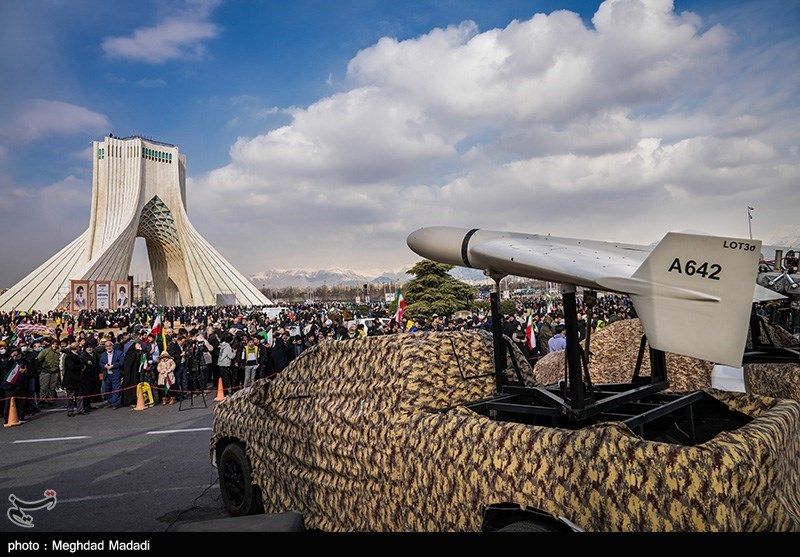
Last week, in response to Iranian attacks in the Strait of Hormuz, U.S. forces struck over 170 targets in Iran in some of the most intense attacks since the war began. This week, the U.S. reimposed a naval blockade of the strait. The resumption of the war is a clear indication that the “Memorandum of Understanding” the U.S. and Iran signed in June was no longer in effect.
Despite the U.S. use of force, Iran continues to resist U.S. demands to open the Strait of Hormuz and negotiate limits on its nuclear enrichment program. To explain why this might be the case, Stacie Goddard sat down with Reid Pauly, author of The Art of Coercion, for a Good Chat.
Stacie Goddard: As you note in your book, when strong states try to coerce weak ones, they only manage to do so about a third of the time. Let’s start with the basics – what do you mean when you say states are trying to coerce?
Reid Pauly: Coercion is a strategy of using threats – usually related to military or economic punishment – to try to change the behavior of others. Governments use it to resolve disputes of any kind in their favor: to secure better terms in a trade deal, for example, to curtail human rights abuses abroad, or to stop nuclear weapons programs. It is a tempting tool in foreign policy, because after all who wouldn’t want to get their way without having to fight. Coercion conveys a choice: Obey me, or else. Brute force takes what you want; coercion convinces the other side to give it to you.
What’s puzzling is that this approach doesn’t work very often, and our intuitions about powerful coercers often fail us. American threats have succeeded less than a third of the time. So being big and strong is not usually enough to cow the other side. The book asks why.
Your argument is that states struggle to coerce, not because they are too weak or too assertive, but because they fail to reassure their targets. Why is reassurance so important?
Because every coercive threat contains an implied promise that the pain is avoidable – what the book calls coercive assurance. And, too often, threats merely convince targets that they are “damned if they do and damned if they don’t.” Iraq’s President Saddam Hussein told his advisers as much in the mid-1990s, noting that Iraq could either have sanctions with U.N. weapons of mass destruction (WMD) inspectors or sanctions without WMD inspectors. He concluded that Iraq would suffer anyway, so he simply stopped cooperating with inspections.
If reassurance is so important, why don’t governments try to provide it? If, for example, the U.S. government understood that Kim Jong Il and Kim Jong Un needed assurances that their rule would survive in order to end North Korea’s nuclear program, why didn’t U.S. officials make this clear?
Leaders usually do far more to make targets believe their threats than their assurances. As a kind of proxy example in U.S. foreign policy signaling, U.S. National Security Strategy documents from the Reagan era to the Biden administration contain 13 times more threats than coercive assurances.
There’s no “one quick fix,” but I do like to begin by correcting common biases in our instincts. When coercion fails, we tend to blame some flaw in the coercer’s threats, usually their credibility or severity. People have to believe these threats and their pain has to hurt. So leaders lament: If only they didn’t think we were bluffing, if only we squeezed them a little harder, for a little longer. And this bias leads to less creative thinking about how to communicate coercive assurance.
Most importantly, even sincere coercers face lots of barriers to communicating credible coercive assurance. You can’t just tell Kim Jong Un that you mean him no harm. He won’t believe you. After all, you want him to believe that you mean him conditional harm. The book calls this “the assurance dilemma.” The actions coercers take to bolster the credibility of their threats undermine the credibility of their assurance not to punish.
Here are some of the ways the dilemma works. First, coercers often build coalitions to demonstrate unified resolve or increase the severity of punishments. In doing so, coercers can lose control over the ability to withhold punishment on their terms. Targets ask whether in striking a bargain with you, they will punish them anyway.
A second and related problem is entangling multiple issues. Governments also logroll when constructing coalitions, tying multiple demands to the same threatened punishments. When targets consider conceding to one demand, they assess that they will have to bear the pain anyway over another issue that they’ve not conceded.
Third, targets defy coercion if they think that conceding will only increase the probability of punishment. Sometimes coercers learn from a concession about who the target is and what they are capable of – and thus whether their demands were calibrated appropriately in the first place. So targets like to know that their concessions will not reveal new things to the coercer.
Let’s talk about Iran, specifically. News reports point out that the Trump administration has not communicated a consistent goal. But certainly one of the goals is to get Iran to give up its nuclear program, especially the Iranian efforts to enrich uranium. And despite a significant use of force, negotiations have failed. How would your theory explain this?
I do think nuclear nonproliferation is the core coercive demand of the Iran war. At the start this goal was muddied by the overreaching U.S. and Israeli attempt at brute-force regime change from the air. The war then made control over the Strait of Hormuz a central issue, which the MOU attempted to address by bringing about a ceasefire and returning the parties to the negotiating table. (As we wrap up this Good Chat, the durability of that ceasefire is very much in question.) And failed coercion over the nuclear issue helps to explain why we are here in the first place. Iran has long feared that the United States and Israel intend to harm the regime, no matter what happens in negotiations.
The last nuclear bargain, in 2015, required a lot of coercive assurance signaling. Of course, getting Iran to the table required severe sanctions and credible threats of force. But the negotiations themselves were not about communicating how much we were going to hurt Iran, they were about communicating that we actually meant it when we said we were willing and able to lift sanctions, and to withhold bombing. Overcoming Iran’s skepticism required signals that Congress and Israel would not act as spoilers. The Obama administration negotiated with Congress to bound its oversight of sanctions waivers. And the parties shared knowledge of Iran’s past weaponization research, so conceding would not self-incriminate. As then-National Security Advisor to the Vice President Jake Sullivan described it: “We knew, and they knew that we knew, and we knew that they knew we knew.”
When the first Trump administration withdrew from that deal in 2018, Iran learned exactly this lesson: American coercive assurance was not credible. Washington re-entangled multiple coercive demands, including about Iran’s ballistic missiles and support for proxy groups. Then, in June 2025 and again in February 2026, the United States and Israel went to war against Iran – while, in Iranian minds, new nuclear negotiations were ongoing. In both instances Trump seems more reactive to Israeli Prime Minister Benjamin Netanyahu’s strategy than proactive about demonstrating Washington’s ability to deliver Israeli compliance with any bargain. So U.S. coercion has been hampered less by the credibility of its threats than by the credibility of its assurance.
What does your research suggest about ways to roll back Iran’s enrichment program? Do you see options that might be politically feasible for both sides?
To begin with, an important takeaway is the limits of strength alone. A state that cannot make credibly contingent threats is a weaker state, no matter how much it can threaten. I call an appreciation of this “coercive empathy”: seeing the world through the eyes of the target, understanding its fears and incentives, if only to manipulate them.
In terms of the strategies discussed in the book, the president’s newly stated position that the thing that really matters is that Iran never has a nuclear weapon seems on point. Negotiations with Iran could institutionalize this by tying nuclear-specific relief to nuclear steps, and resist re-entangling missiles and proxies. And it will be important to demonstrate that it’s the United States, not Israel, that will dictate whether Iran is struck again in the future.
Calls for Iran to “come clean” and confess its past nuclear sins have also long imperiled negotiations. Effective nuclear agreements are forward-looking, within the limits of what needs to be known about the past to verify future compliance. For example, it’s more important to account for Iran’s highly enriched uranium and dilute it, vs. whether it’s surrendered or shipped out of the country. After the June 2025 air strikes on Iran’s nuclear facilities, verification is going to be painstaking work, but the International Atomic Energy Agency is good at its job and will need as much international support as it can get.
Nuclear proliferation is not a problem to be solved so much as something to manage in perpetuity. A capped, intrusively monitored Iranian nuclear program is still a worthy goal. Given its ineffective approach to coercion, the Trump administration may now struggle to reach even that kind of deal with Iran.