





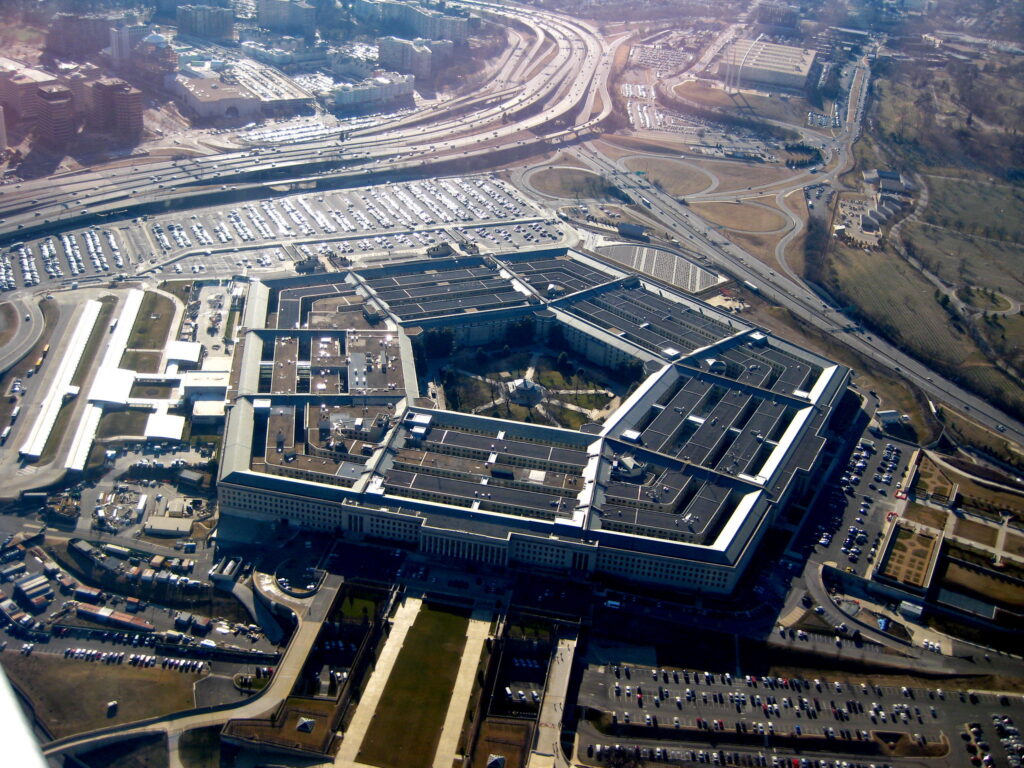
On Sept. 5, the Trump administration issued an executive order to proclaim the Department of Defense has a new name: the Department of War. The justifications for the name change vary, from focusing the department on its “warfighting” mission, to making the department more lethal, to making Americans safer. For example, Secretary of (now) War Pete Hegseth declared, “We’re going to go on offense, not just on defense. Maximum lethality, not tepid legality. Violent effect, not politically correct […] We’re going to raise up warriors, not just defenders.”
This White House directive also suggests that the rebranding “ensures peace through strength, as it demonstrates our ability and willingness to fight and win wars on behalf of our Nation at a moment’s notice, not just to defend. This name sharpens the Department’s focus on our own national interest and our adversaries’ focus on our willingness and availability to wage war to secure what is ours.” Even the Washington Post editorial board weighed in favorably, suggesting that “Euphemisms distort thought, and no entities are more adept at producing euphemisms than governments. President Donald Trump’s rebranding… of the Department of Defense as the Department of War is a worthy blow against government euphemism.”
Congress still has a say in the matter. But what do Americans think? Good Authority editor Stacie Goddard asked political scientists Don Casler and Robert Ralston to discuss their recent survey on this name change.
Stacie Goddard: Tell me a bit about your survey. What did you ask? What did you find?
Don Casler and Robert Ralston: We asked 2,542 U.S. respondents how they felt about the name change from the Department of Defense to the Department of War. The survey, fielded by Qualtrics, was embedded in a longer questionnaire that also asked respondents about other topics. The sample was nationally representative in terms of age, gender, and geographic region.
We first asked respondents, “As you may have heard recently, the Department of Defense has been renamed the Department of War. Do you support or oppose changing the name of the Department of Defense to the Department of War?” We found majority opposition to the name change: 54% opposed (36% strongly, 18% somewhat), while 22% supported, with the rest undecided.
Did you ask them whether they agreed with the president, the secretary of defense/war, or others about the importance of the name change?
Yes, although not in those exact terms – after asking respondents about their overall support or opposition to the name change, we then asked respondents three more questions to understand whether they agreed with the premises behind the rebranding, namely that it would increase lethality, focus the mission of the department, and make Americans safer.
We found that respondents do not believe that the name change will make the U.S. safer, mirroring the overall unpopularity of this decision. In fact, 54% of our respondents disagreed with the premise that the name change would make the United States safer, while only 20% agreed (the other 26% neither agreed nor disagreed).
However, across the political spectrum, our respondents were more amenable to the notion that the name change will focus the department and make it more lethal. First, 45% of respondents agreed with the statement that changing the name of the Department of Defense to the Department of War “will narrow the focus of the Department,” while only 26% disagreed. Second, roughly equal shares of respondents agreed (35%) and disagreed (35%) with the premise that the name change would increase the lethality of the U.S. military.
You mentioned that there was more agreement across the political spectrum that the name change will focus the Department and make it more lethal. Are there any interesting differences or similarities between Republicans and Democrats?
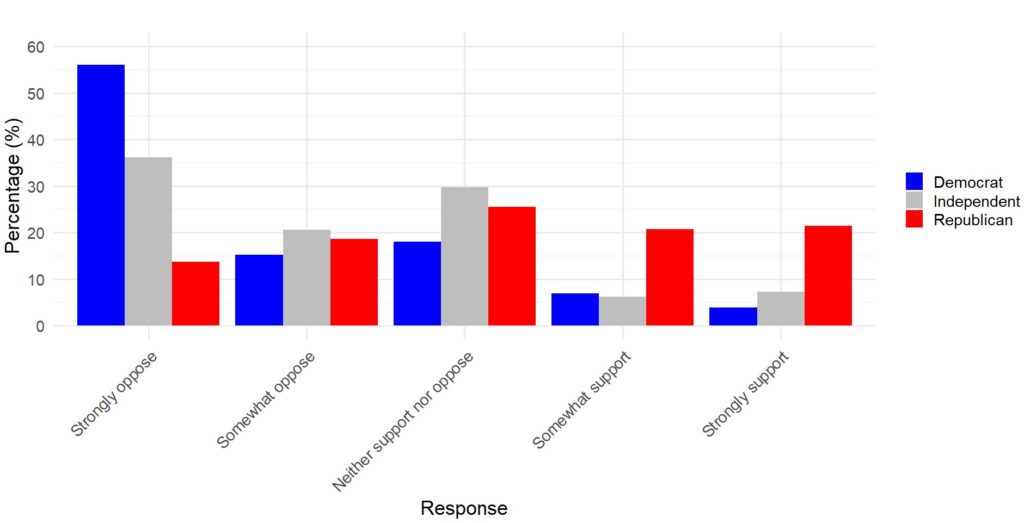
We were surprised that most Democrats seemed to concur with the name change’s impact on the department’s focus: Most Democrats agreed with the premise (52%). It didn’t surprise us, though, that most Democrats and independents opposed the name change in general, whereas Republicans were warmer to it.
Yet only 42% of Republicans overall expressed support for the name change, as the figure below shows. In a highly polarized environment, we expected the results to largely fall along party lines. Instead, it appears that the name change is broadly unpopular, even if citizens across the political spectrum are sympathetic to at least some of the administration’s stated justifications for this change.
It does not seem like there is broad public support for the change. So is this rebranding likely to stick beyond this moment?
While it’s too soon to tell, the data are consistent with the notion that this is a superficial change. Legally speaking, the president can’t officially rename an executive department without an act of Congress. But even if the name change became official, it remains to be seen how much the Pentagon’s mission or day-to-day activities would shift.
Of course, thus far Trump has taken remarkable steps to reshape the executive branch. His administration has effectively dissolved the Department of Education and the U.S. Agency for International Development, for example. These moves raise broader questions about which changes will outlast Trump’s time in the White House. A future administration might very well reconstitute these agencies – or revert to the Department of Defense, even if without fanfare. Then again, perhaps the “Department of War” moniker will hang around. It does carry some weight as the department’s original name, even if the modern version looks nothing like when it was last rechristened in 1947.
However, the most influential ramifications of the name change might lie in what it seems to signal about the sort of behavior that the department will tolerate or even endorse among the rank-and-file. Hegseth has previously defended U.S. service members accused of war crimes. And since taking office, he has consistently articulated a masculine and muscular view of how U.S. power should look. He has fired disproportionate numbers of Black or female general officers, shuttered the Pentagon office in charge of preventing civilian harm during U.S. combat operations, and defended recent U.S. strikes in the Caribbean without providing evidence that the vessels being targeted are transporting narcotics. If “Department of War” becomes synonymous with “anything goes on the battlefield,” we could see significant (and potentially lasting) differences in how America fights its wars.
But for now, at least, it appears that a majority of Americans neither endorse the name change nor see it chiefly as a matter of national security.