






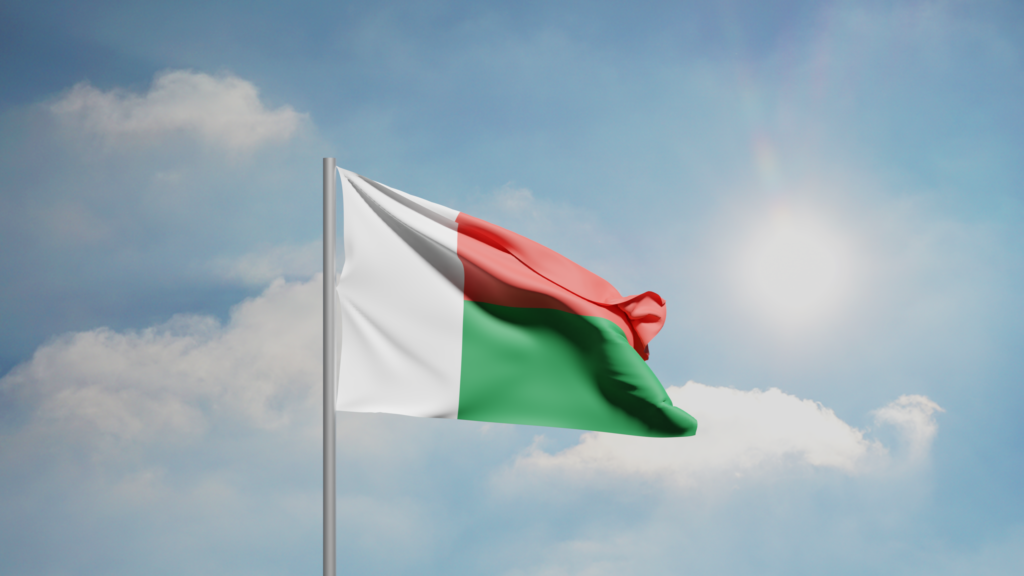

On Sept. 25, youth in Madagascar began protesting in the capital city of Antananarivo, first over water and electricity shortages. Their demands soon shifted to a change in leadership. On Oct. 11, the politically powerful and elite CAPSAT unit of the Malagasy army joined the protesters, and assumed control of all military forces.
The next day, on national television, the paramilitary gendarmerie that had been working with the policy to subdue the protests, announced, “All use of force and any improper behaviour towards our fellow citizens are prohibited, as the gendarmerie is a force meant to protect people and not to defend the interests of a few individuals.” This was a clear signal that they, too, had sided with protesters. On Oct. 17, Colonel Michael Randrianirina, the CAPSAT commander, was sworn in as president in the High Constitutional Court.
This youth-led revolt is the second in recent weeks to lead to a massive governmental change. In September, protests in Nepal brought about the resignation of KP Sharma Oli. These protests also follow a year of sustained youth protest in Kenya, starting in June 2024. Adopting the same “Gen-Z” moniker, protests emerging in Morocco, Peru, and elsewhere signal generational solidarity across these countries.
So what just happened in Madagascar? And why are the youth in so many countries taking to the streets?
Madagascar went from mass protests to a military coup
Madagascar now has a new president, Colonel Michael Randrianirina. The protesters blamed President Andry Rajoelina for government mismanagement and corruption, and called for his removal. After two weeks of youth-led protests, elite military units defected to join the protesters, and Rajoelina fled the country. CAPSAT, the same military unit that spearheaded the coup that seems to have ousted Rajoelina, actually helped him take power in a military coup in 2009. While Rajoelina did step down from the presidency in 2014, he was reelected in 2019 in a mostly free and fair election. He was reelected again in 2023 in an election that international observers criticized for repression of the opposition. Rajoelina is still in hiding, with some news outlets reporting he was evacuated by a French military plane.
Randrianirina, a critic of the former president, reportedly was part of a mutiny plot in 2023. His Wikipedia page was written and published on Oct. 16, signalling the recent rise to prominence of this little-known figure in Madagascar’s politics. The colonel rose into the public consciousness when he recorded a video calling on his fellow CAPSAT officers to disobey orders to fire on protesters – and instead join them. Large crowds cheered and celebrated the new president, but both the African Union and the United Nations have condemned the military takeover as unconstitutional.
Youth uprisings are on the rise around the world
The protests in Madagascar follow the 2024 protests in Kenya, protests last month in Nepal, and ongoing protests in Morocco, Peru, Indonesia, and elsewhere. In each of these semi-democratic countries, youth are leading the charge – and demanding substantial political change. Despite the similarities in these protests, the specific demands of the protesters vary across contexts. In Kenya, changes in tax law sparked the protests. In Nepal, corruption was the main concern for protesters. Shortages of water and electricity in Madagascar brought people to the streets initially. In Morocco, underfunding of education and health care are at the forefront of demands made by protesters. And in Peru, protesters hold the government responsible for failing to stem extortion and violent crime.
So, how can we make sense of this wave of protest?
Taking a closer look at Kenya, Nepal, Morocco, and Madagascar, all of these countries have elements of democracy without being fully democratic. They hold multiparty elections to elect seats in legislatures. And they allow opposition party participation and provide opportunities for legal and peaceful participation. Their scores for “Electoral Democracy” have increased in recent years, according to the Varieties of Democracy (V-Dem) index. But they all lag on other dimensions of democracy, including in terms of freedom of participation (Participatory Democracy – see the table below), electoral fairness, and freedoms of association and expression (Deliberative Democracy).
The scores on these indices range between 0 and 1, with higher scores indicating more democratic processes and protections. These are countries in which elections have occurred, and been contested, but they have also had significant irregularities, corruption remains a consistent problem, and the government does not always respect the rights of citizens.

Paired with the relatively low turnout of young voters in Kenya, Morocco, Nepal, and Madagascar (pre-protests), these protests indicate that government efforts on electoral reforms have not satisfied demands from youth. In other words, the supply of democracy is not meeting the demand. This leaves protesters seeking ways other than elections to participate in and deliberate about politics.
Quick changes, yes – but will it last?
Youth-led protests are getting people out into the streets to demand substantial changes. But it is often far easier to remove a president than it is to build electric grid capacity or tackle corruption. Madagascar’s new president has promised to head a military government for 18 to 24 months before transitioning back to civilian rule and elections. In Morocco, the government has empowered security forces to put down protests. Despite nearly 1,000 arrests, the protests are still growing. A month after they forced a change in government, protesters in Nepal are now arguing that the new leadership is not taking up their concerns. In Kenya, protesters were successful in curtailing new tax laws, but many youth remain dissatisfied with their government.
Whether the protests in Madagascar and elsewhere will yield long-term change is yet to be seen. Political science research suggests while protests in non-democracies can yield quick changes in leadership, they often do not signal lasting reform. What does seem certain, however, is that the Gen-Z protests are spreading fast, and demanding many changes.