





The idea of governments paying workers to stop working might once have seemed absurd. Yet as Donald Trump and Elon Musk’s offers to federal workers in recent weeks suggest, such wage buyouts are becoming increasingly common. Can buyouts work? My research suggests that it depends on whether policymakers understand how deeply people’s identities are tied to their jobs – and whether they design buyouts accordingly.
Both sides of the aisle use this policy tool
In recent years, a number of governments have deployed wage buyouts across a range of industries to support labor transitions. In 2022, for example, the Dutch government paid dairy farmers to stop farming in an effort to reduce nitrogen pollution. Germany and Canada have compensated coal workers to accelerate the phaseout of coal-fired power plants. Australia and New Zealand have run “vessel buyback” programs, paying fishermen to permanently retire their boats and help address overfishing.
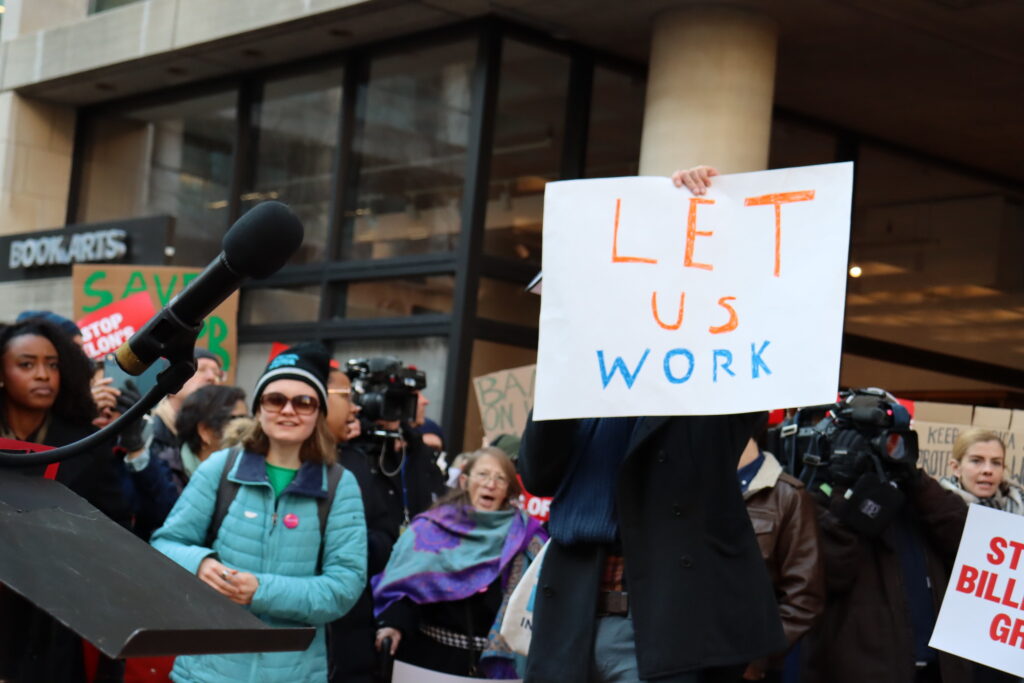
These initiatives are often controversial. The Dutch program, for instance, won praise as a step toward sustainability. But many in the Netherlands turned out for mass protests against the dairy farmer buyouts. It became fodder for the populist right, from France’s Marine Le Pen to Donald Trump, who all lambasted the policy as a technocratic effort to press blue-collar workers into irrelevance, under the banner of liberal progress.
The Trump/Musk buyouts raise a lot of questions
All of these examples make it especially surprising that the latest large-scale wage buyout has in fact come from the political right, this time in the name of government efficiency. In its second week in office, the Trump administration, propelled by Elon Musk’s cost-cutting zeal, offered a buyout to 2.3 million federal workers, promising full pay until October in exchange for their resignation. Pitched as a bold move to shrink government, the plan has flopped.
The buyout’s very premise is questionable. Trump and Musk claim the federal government is “bloated.” A Feb. 11, 2025, executive order promised to eliminate “waste, bloat, and insularity” in the federal bureaucracy. But the size of the U.S. federal workforce today is roughly the same as it was half-a-century ago, despite federal spending growing significantly. And the risk of cutting the federal workforce indiscriminately is that it may handicap the government’s ability to deliver vital services, whether that’s managing disaster response, maintaining national infrastructure, or administering social welfare programs.
Yet even if one accepts the premise, the buyout initiative was poorly designed. As a result, a tiny proportion of federal employees accepted the offer – far fewer than in similar initiatives in the past. A buyout during the Clinton administration, for instance, effectively reduced the federal workforce by 270,000 jobs. Many of the federal workers who accepted the Trump-Musk offer were nearing retirement, reducing its net effect. And legal experts point out it’s also unclear whether those who accepted the offer will ever receive their promised compensation.
What I’ve learned from researching wage buyouts
I have spent the past several years looking into wage buyouts. As a political economist, the question that interests me is whether these schemes can ever be a legitimate policy tool to accelerate broad changes in the workforce. In a large study that just came out, based on three nationally representative surveys of U.S. workers, I show how resistant people are to giving up their work, irrespective of the effect on their income. In fact, most Americans would rather work half their usual hours than stop working entirely, even for the same pay. This insight underscores why the Trump administration’s federal employee buyout was so poorly conceived.
Yet wage buyouts, when properly designed, can in fact be a good idea. In some cases, an industry does more harm than good to society – whether through environmental harm, as with Dutch dairy farming, or through inefficiency, as with bloated bureaucracies. Historical precedents for government workforce reductions through buyouts often follow large-scale conflicts like the Cold War, when governments seek to downsize excess defense industry capacity. In such cases, federal employee buyouts can be a bipartisan initiative. It was Vice President Al Gore who claimed in 1994 that buyouts can “help rid the federal government of unnecessary and duplicative layers of management control that result in inefficiency and red tape.”
The main appeal of wage buyouts is speed
Wage buyouts allow policymakers to fast-track transitions that would otherwise slowly take place through normal labor market churn. In this sense, wage buyouts represent policymakers paying up-front for policies they believe will pay off in the long run. The logic is akin to eminent domain: Just as governments may claim private land for public use – while compensating landowners – they may also pay workers to exit jobs they believe are no longer to the broader society’s benefit. But for buyouts to be effective, the offer must include meaningful compensation, and also acknowledge the psychological and social importance of employees’ work.
By this standard, the Trump-Musk buyout went about it in entirely the wrong way. Trump was quick to criticize the Dutch farmers’ buyout, but failed to learn from it. As one of the protesting Dutch workers put it, “I don’t want a bag of money from the government. I just want to do my job.” Wage buyouts must acknowledge the non-material ties people have to their work.
This hurdle is not just about farmers and coal workers with multi-generational ties to their way of life. In fact, in the recent study, white-collar workers identified more strongly on average with their jobs than blue-collar workers, making buyouts particularly difficult to sell in knowledge work sectors. A long line of research reveals that public servants typically have higher-than-average levels of intrinsic motivation, reflecting an apparently genuine desire to serve the public interest.
This research suggests that the Trump-Musk “Fork in the Road” emails, bullying federal workers to give up their jobs, is a poor means of recognizing people’s non-material ties to their work. Offering to reduce work hours of permanent workers, rather than cutting ties entirely, would have proven more popular.
Buyouts depend heavily on trust
Yet the greatest challenge for wage buyouts is credibility. Because governments often deploy buyout programs for partisan ends, workers have reason to doubt whether any promises will be honored. In the Canadian province of Alberta, a coal worker buyout was scrapped when a new Conservative government repealed the tax that was meant to fund it.
The U.S. federal worker buyout has faced similar skepticism. Its legality remains questionable, and many federal employees and labor experts alike don’t trust the administration to pay up. The ambiguous legality of the Trump-Musk buyout likely did the most to hurt its effectiveness. Had it included a more credible commitment to workers, the Fork in the Road offer would likely have seen more buy-in. In contrast, the Clinton-era buyout offered an up-front lump-sum payment of up to $25,000, which was a likely factor in its relatively greater popularity.
Wage buyouts can be an effective policy tool, and we are likely to see governments on both sides of the partisan spectrum resorting to them increasingly often. The challenge in designing such buyouts lies in recognizing that for most people, work represents more than a paycheck.
Krzysztof Pelc is the Lester B. Pearson Professor of International Relations at Oxford University.