






We live in a country in which rates of suicide are, unfortunately, increasing. This graph from the CDC shows you the trend from 2003 to 2023:
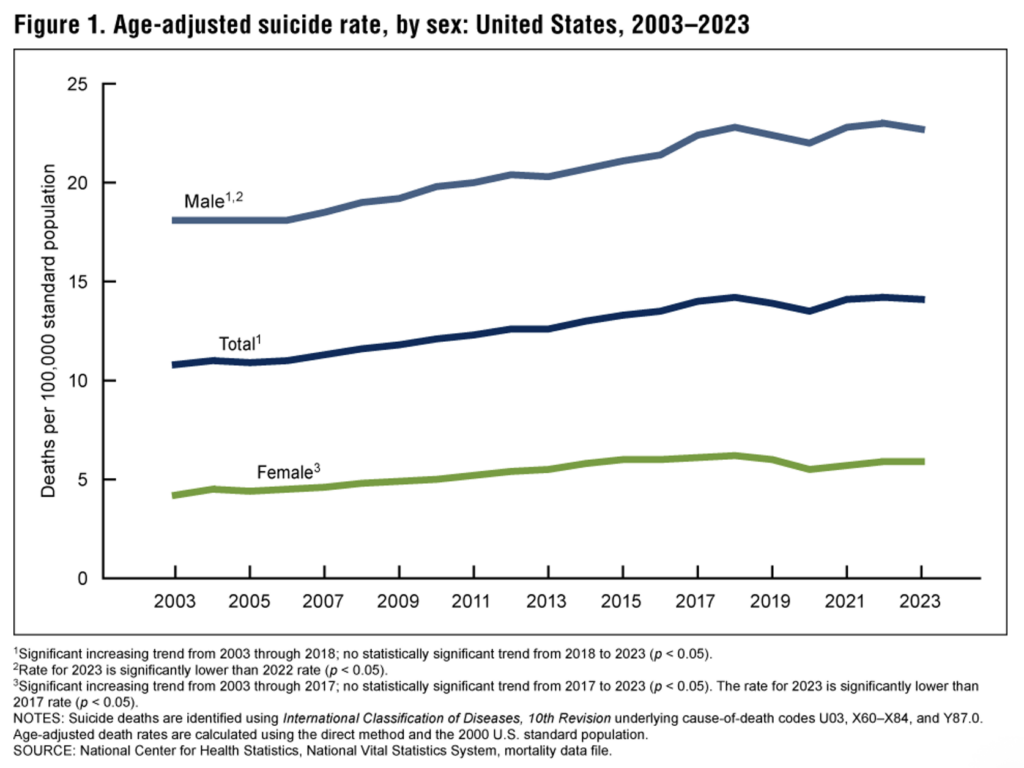
The statistics for 2024 suggest a continued increase: 14.4 deaths per 100,000 people versus 14.1 in 2023.
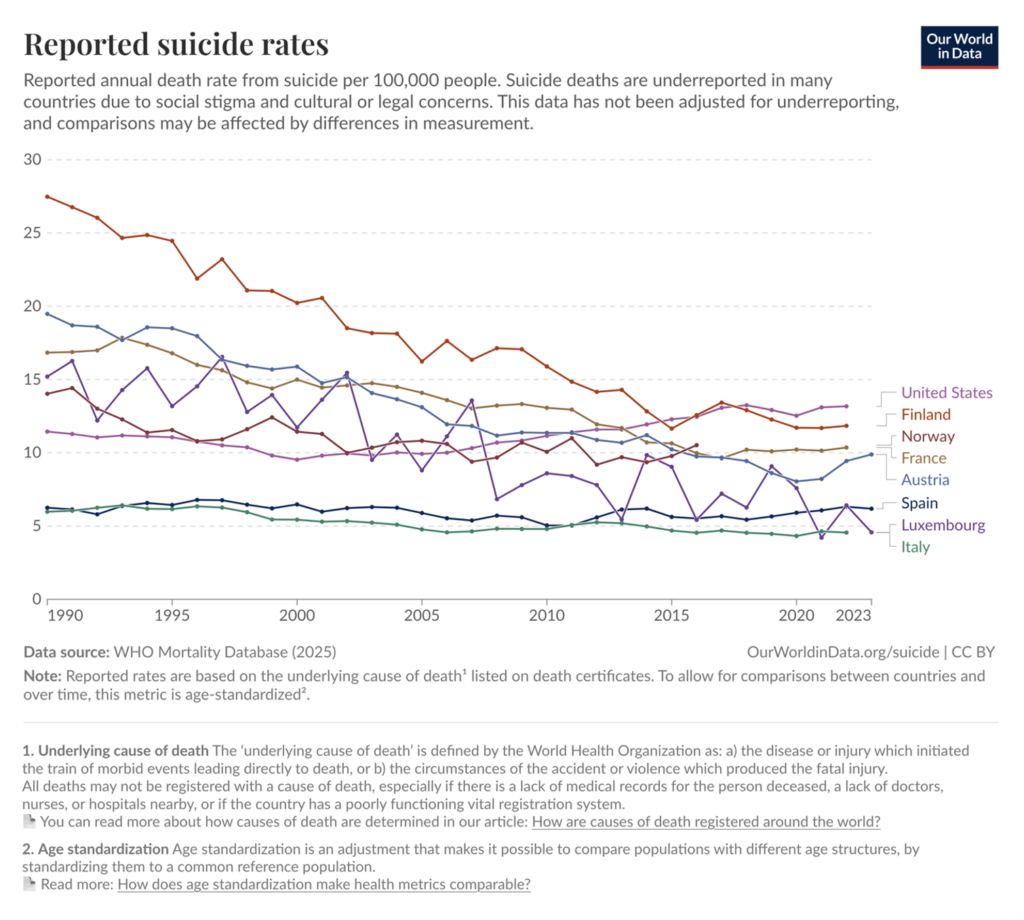
This puts the United States at odds with the trend in at least some developed countries. The graph below features countries where suicide rates have declined and where, according to Our World in Data, the data are of particularly high quality:
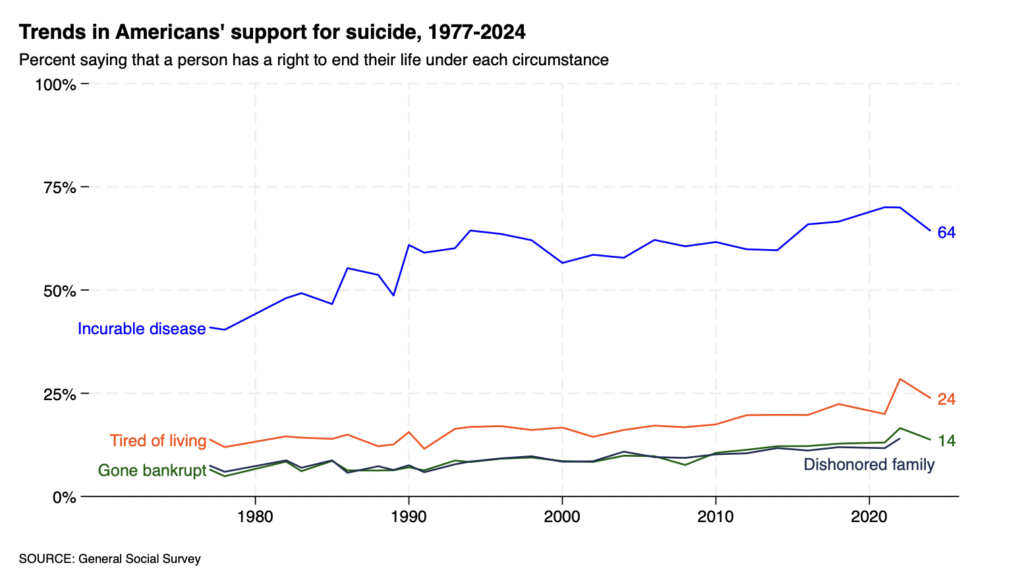
In light of the U.S. trend, I looked at the longest-running trend in public views of suicide that I know of, from the General Social Survey. Since 1977, respondents to the GSS have been asked whether they support or oppose suicide in four circumstances:
Do you think a person has the right to end his or her own life if this person: Has an incurable disease; Has gone bankrupt; Has dishonored his or her family; Is tired of living and ready to die?
Here are the trends:
A few observations:
- Suicide remains broadly unpopular, except in the case of an incurable disease. Public sympathy in that case is consistent with majority support for euthanasia, at least based on Gallup polling.
- There has been quite a bit of stability in attitudes. Support for suicide in cases of incurable disease rose between 1977 and the early 1990s, but has increased only a little bit since then. The increases in support for suicide in other cases have been similarly small.
- In that sense, views of suicide are more like views of abortion, where there is also a lot of stability. This contrasts with views of some other “social” or “moral” issues, where there have been steeper liberal trends. Examples of those issues include marijuana legalization, premarital sex, gender roles (until recently), and same-sex marriage (again, until recently).
Here’s another interesting finding. In the 2022 and 2024 surveys, the GSS did an experiment where some people were invited to complete the survey with an interviewer (either in-person or on the phone) and others completed the survey themselves.
If you look at respondents who completed the survey in the format that matched the initial invitation, you see higher support for suicide among those who completed the survey themselves as opposed to with an interviewer. It was 9 points higher (62% vs. 73%) in the case of incurable disease, and also higher in the case of bankruptcy (13% vs. 17%), dishonoring one’s family (12% vs. 17%), and being tired of living (22% vs. 28%). This suggests that some respondents may cloak their true feelings when talking to an interviewer, perhaps because of the stigma attached to suicide.
Stay up to date on all things politics and political science. Bookmark our landing page and sign up for Good Authority’s weekly newsletter by entering your email address in the box below.