





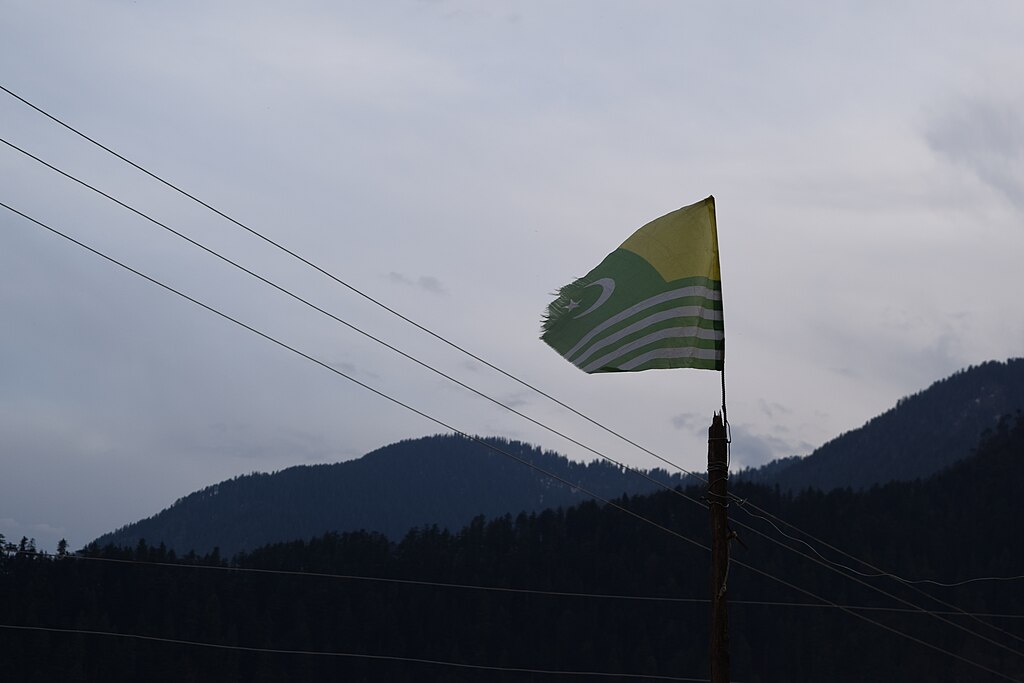

Rising prices – not calls for a free Kashmir – set off violent protests this month in the Pakistan-administered portion of the disputed territory. These were some of the largest protests to occur there in a generation.
Protests in Pakistan’s portion of Kashmir – what Pakistan calls Azad or “free” Kashmir – have sometimes sought to motivate Pakistani authorities to take more strident steps to liberate their Kashmiri brethren under Indian administration. But this month’s protests centered on more everyday concerns. Azad Kashmiris complained inflation in their region had made economic life untenable.
The long conflict over Kashmir
In 1947-1948, India and Pakistan fought their first war primarily over the status of Kashmir. The Muslim-majority region was governed in 1947 by a Hindu ruler who eventually opted to accede to India. The military clash over Kashmir was inconclusive, resulting in the division of the region into Indian- and Pakistani-administered areas. A ceasefire line – renamed the Line of Control in a subsequent 1972 agreement – separated the two sections.
On India’s side of the line, Kashmir had additional autonomy under the Indian constitution. The government of Narendra Modi ended that special status in 2019. In Pakistan, Azad Kashmir had and retains a separate governmental structure from the rest of Pakistan. For the government of Pakistan, the logic of this arrangement was that incorporating the region into Pakistan should wait until the status of all of the disputed territory was settled.
Azad Kashmir relies heavily on Pakistan
This landlocked region cannot exist without close ties to the rest of Pakistan, however. Azad Kashmiris protested this month to say those ties were exploitative. They argue that the territory provides economic resources to the rest of Pakistan without getting commensurate economic benefits or a political say in their use.
Azad Kashmiris point out their region’s importance for many of Pakistan’s vital river systems, which provide hydroelectricity and irrigation water to the rest of the country. Pakistan as a whole has trouble keeping up with electricity demand. In recent years, many parts of the country allege that wealthier and politically more important parts of Pakistan get preferential access to electricity while they suffer frequent and sometimes prolonged blackouts. Azad Kashmiris argue they send electricity to the rest of Pakistan while getting little to improve their own daily life.
This situation had existed for a while but became especially irksome after the Pakistani government cut back subsidies not just on electricity but also other staples such as flour. High inflation over the past two years, meanwhile, continued to erode household budgets.
The subsidy cutbacks reflected Pakistan’s broader macroeconomic woes, which have forced the South Asian country to negotiate repeatedly with international donors for financial lifelines. Those donors, in turn, see no reason to provide generous loans without Islamabad getting its fiscal house in order. Otherwise, economists point out, external aid would be like adding water to a hole-riddled bucket.
Negotiations with protesters – and the IMF
The government belt-tightening led to large-scale protests in Azad Kashmir on Friday, May 10, that continued for several days. Political scientists have shown that protests in Pakistan often peak on Fridays. That’s when men gathering for Islamic Friday prayers have a natural coordinating point from which to launch social mobilization campaigns. One policeman and several protesters were killed in the ensuing violence, and dozens of protesters were injured. The Pakistan national government in Islamabad announced an $82 million financial assistance package to placate the protesters. On May 16, Prime Minister Shehbaz Sharif visited the region, promising further assistance.
Pakistan’s economic troubles are still severe, however. Sharif notably sought to delay any permanent resolution of Azad Kashmiri grievances over hydropower until after Pakistan concluded its current round of negotiations with International Monetary Fund (IMF) officials. So long as the Pakistan economy struggles with inflation, the government will have difficulty delivering the austerity international donors demand without triggering popular backlash at home.
One former journalist turned politician in Pakistan, Sen. Mushahid Hussain, said this week that the events in Azad Kashmir represented the first “IMF riots.” The concern is they may not be Pakistan’s last protests as the populace bristles under austerity measures imposed from above.