





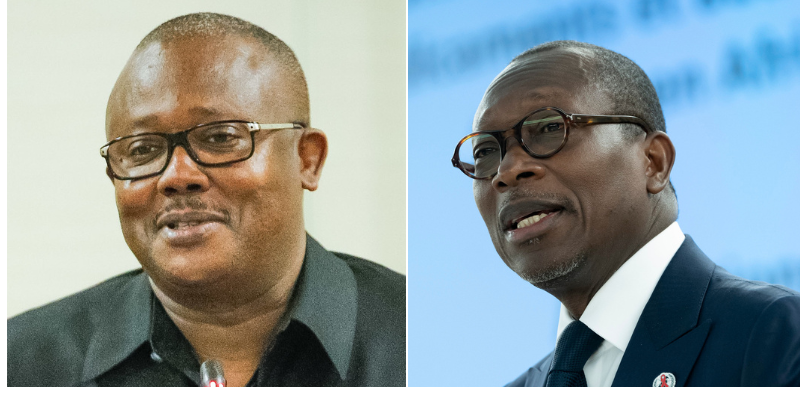
A recent coup in Guinea-Bissau that ousted President Umaro Sissoco Embaló – and an attempted coup in Benin against President Patrice Talon – raise questions about the increasing frequency of military coup attempts in Africa, and in the Sahel region in particular.
Since 2020, coups and coup attempts have become more common. This suggests that coup leaders are learning and building on previous attempts. What distinguishes the recent military interventions in Benin and Guinea-Bissau, however, is the role of democracy. Coup leaders are responding to democratic disappointments and intervening in democratic processes.
Benin’s attempted coup
On Dec. 7, a group of soldiers appeared on national television in Benin to announce that they had seized power from President Patrice Talon, a civilian leader who has been in power since 2016. The coup attempt was spearheaded by a member of the president’s personal security detail. Later that day, domestic security forces repelled the coup attempt, with the help of airstrikes from neighboring Nigeria.
Talon later took to the airwaves, promising to find the coup organizers and bring back any hostages they had taken. The Economic Community of West African States (ECOWAS) announced that it would deploy ground troops from the region to “preserve constitutional order and the territorial integrity of the Republic of Benin,” an ECOWAS member. Security forces reportedly arrested 14 coup plotters last week, though some are still evading authorities. Government sources assert that the actual group of mutineers was very small.
A coup (with cooperation?) in Guinea-Bissau
The attempted coup in Benin came just two weeks after a successful coup in Guinea-Bissau. On Nov. 26, a military faction deposed President Embaló three days after a hotly contested general election in which both the president’s party and the major opposition claimed victory. It also follows on the heels of three unsuccessful coup attempts and plots in Guinea-Bissau within the last three years. Since the coup attempt, the country’s Electoral Commission has been unable to certify the election results, and commissioners have said that coup-aligned sections of the military interfered with vote counting and destroyed results. Coup leaders detained the president, who was then evacuated by plane to neighboring Senegal, and later to the Republic of Congo.
Opposition leaders alleged that the coup itself had Embaló’s blessing, and was an attempt to maintain control through sympathetic military elements rather than lose the election. But this claim remains unconfirmed. A day after the coup, General Horta Inta-A, an advisor and ally of Embaló, was sworn in as transitional president.
Democratic elections played a role in these military takeovers
What stands out in this phase of military rule in Africa is the role of elections. Many of the countries experiencing coup attempts in the last two years saw these moves either in the wake of elections, delivering the promise to hold elections.
For example, a 2023 coup in Gabon led to elections in September and October 2025, the first such polls in 50 years. Mali’s military leadership held a 2023 constitutional referendum, a crucial step on the path back to civilian leadership after back-to-back coups in 2020.
Coups across the region have been correlated with widespread disappointment in elected civilian leadership, but coup leaders also specifically talk about democracy as the end goal. These types of military intervention are what scholar Nancy Bermeo calls “promissory coups”: Coup leaders frame military takeovers as a defense of democracy.
In Benin, the coup attempt came after significant democratic backsliding. Between 2016, when Talon came to power, and 2023, Benin’s democracy declined significantly, despite more than 25 years of continual democratic expansion since independence.
In Guinea-Bissau, the dissolution of parliament in late 2023, the exclusion of major opposition parties from the November 2025 elections, and the expulsion of journalists from the country earlier this summer all signalled significant democratic setbacks in a country that had been gradually democratizing since a coup in 2012. The November elections were contentious, with high levels of voter engagement. African Union observers noted that the elections proceeded peacefully, and largely according to the rules. Election-day predictions put Embaló, the incumbent, in a close race with his main opposition.
Press coverage often frames these military interventions in politics as dramatic anti-democratic moves. But for Guinea-Bissau and Benin, these come amid long-term restrictions of democratic processes, and leaders of these takeovers talk in democratic terms.
The coup plotters in Benin labeled themselves the Military Committee for Refoundation, for example. They promised to end the “excesses of President Talon” during their brief address on national television. Coup leaders in Guinea-Bissau promised a one-year transitional period before returning to elections. Opposition forces in the country alleged that factions of the military loyal to Embaló only intervened when it looked as if the president would lose the election.
A number of countries across Africa saw military rule established largely through force throughout the 1960s to 1980s, with military leaders making an appeal for law and order. Many recent would-be military leaders appeal to public sentiments around democracy and representation – and sometimes enjoy significant public support. While coup leaders often fail to live up to democratic ideals or deliver on good governance, the influence of public sentiment and appeals to democracy still mark this wave of military interventions as distinct from earlier coup trajectories.
The big takeaway from these latest coup actions?
The recent military coup in Guinea-Bissau and the attempted coup in Benin have reignited the fears of coup-driven instability in the region. These fears had waned somewhat in 2024, which saw decreasing military activity. Whether this signals a new “wave” of coups, a reflection of regional challenges, or an aberration in regional politics is yet to be seen. But democratic and coup leaders appear to agree on one key point, however. As the norms against military takeovers of civilian government have eroded, further military attempts to seize power now seem more likely.